
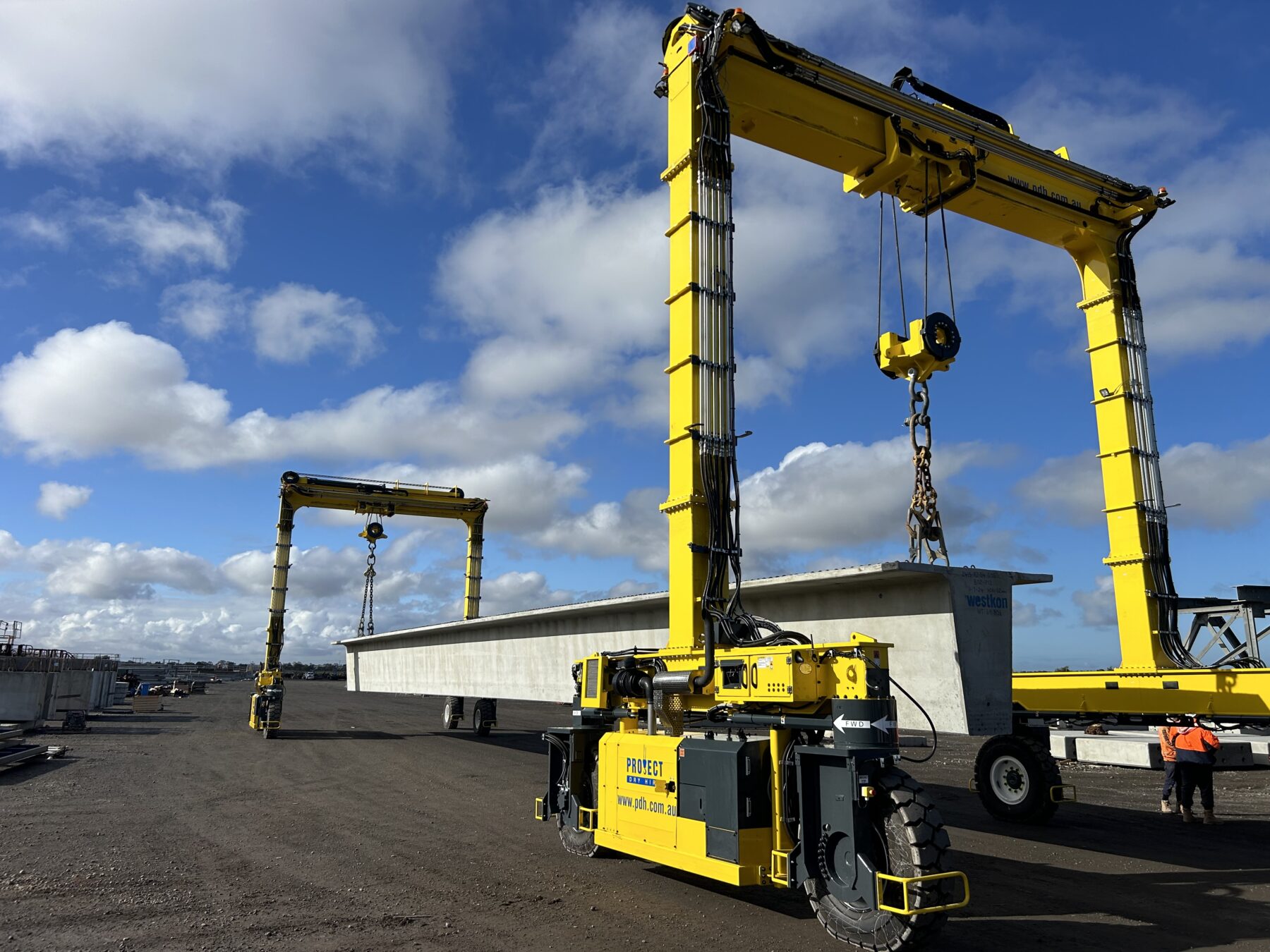
Gantry cranes represent essential equipment for projects requiring reliable overhead lifting capacity without permanent infrastructure investment. From port operations and bridge construction to mechanical installations and plant room upgrades, these versatile systems provide solutions across diverse industries and applications.
Selecting appropriate gantry crane hire requires understanding the various types available, their operational characteristics and the safety considerations that ensure successful project outcomes. This comprehensive guide helps project managers and site engineers make informed decisions that optimise efficiency whilst maintaining the highest safety standards.
Understanding Gantry Crane Types
Gantry cranes share a common basic structure featuring a horizontal bridge supported by legs or uprights, but variations in design create distinct capabilities suited to different applications.
Fixed Gantry Cranes
Fixed or static gantries provide stable lifting platforms for applications requiring repetitive lifts within defined areas. These systems typically bolt or anchor to foundations, offering maximum stability and load capacity for their footprint.
Manufacturing facilities, shipyards and permanent maintenance operations commonly utilise fixed gantries where long-term installation justifies the infrastructure investment.
Mobile Gantry Cranes
Mobile or portable gantries mount on wheels or tracks, allowing movement whilst supporting loads. This mobility provides exceptional flexibility for construction sites, temporary installations and projects requiring lifting capacity across extended areas.
The ability to relocate complete assemblies rather than repeatedly rigging and moving loads separately delivers significant time and labour savings whilst reducing cumulative risk exposure.
Adjustable Height Gantries
Adjustable gantries feature telescoping or modular legs that accommodate various lifting heights. This versatility proves valuable in facilities with changing requirements or projects involving loads of different dimensions.
Height adjustment capabilities also allow these systems to navigate beneath overhead obstacles or adapt to sloping terrain that would challenge fixed-height alternatives.
Single vs Double Girder Configuration
Single girder gantries utilise one horizontal beam, providing economical solutions for lighter loads and shorter spans. Double girder designs employ two parallel beams, supporting heavier capacities and longer spans whilst offering superior load stability.
Application requirements and load characteristics determine which configuration provides optimal performance and value.
Capacity Ranges and Selection Criteria
Gantry cranes span a capacity range from under one tonne for light-duty applications to over 100 tonnes for heavy industrial operations. Selecting appropriate capacity requires considering not just the load weight but also dynamic forces, lifting height requirements and span distances.
Load Assessment
Accurate load assessment includes the weight of materials being lifted plus any rigging equipment, spreader bars or lifting attachments. Dynamic forces during acceleration, deceleration and movement add to static loads, requiring capacity margins beyond simple load weight.
Professional consultation ensures capacity selection accounts for all relevant factors rather than relying solely on load weight specifications that may prove inadequate during actual operations.
Span and Height Requirements
The distance between gantry legs (span) and the required lifting height influence equipment selection significantly. Longer spans and greater heights generally require heavier structural components, affecting mobility, setup requirements and costs.
Precise site measurements and clearance assessments prevent equipment selection errors that create operational constraints or necessitate expensive modifications.
Industry Applications
Gantry cranes serve critical functions across numerous sectors, each presenting unique operational requirements and challenges.
Port and Maritime Operations
Container handling, vessel maintenance and marine construction rely heavily on gantry systems capable of managing heavy loads in challenging environments. Coastal exposure demands equipment designed for corrosion resistance and weather durability.
Bridge Construction and Infrastructure
Bridge girder installation, deck segment positioning and ongoing maintenance operations utilise gantries for their precision and capacity. The ability to span work areas whilst providing stable lifting platforms makes them indispensable for major infrastructure projects.
Mechanical Plant Rooms
Equipment installations in mechanical plant rooms, data centres and industrial facilities benefit from gantry cranes that navigate confined spaces whilst positioning heavy machinery with millimetre precision. The controlled environments typical of these applications allow optimal equipment performance.
Manufacturing and Assembly
Production facilities use gantries for materials handling, assembly operations and quality control processes. Their repeatability and precision support efficient manufacturing workflows whilst reducing manual handling risks.
Maintenance and Shutdowns
Planned maintenance requiring component removal, inspection and reinstallation relies on temporary lifting solutions that gantries provide without permanent facility modifications.
Essential Safety Considerations
Safe gantry crane operations require comprehensive attention to equipment condition, operational procedures and site-specific hazards.
Pre-Operation Inspection Checklist
Before each operational period, conduct thorough inspections covering:
- Structural integrity of beams, legs and support members
- Wheel and track condition, including alignment and wear
- Hoist mechanism function and brake systems
- Wire rope or chain condition checking for damage or wear
- Electrical systems and control functionality
- Load testing verification and capacity plate visibility
- Emergency stop systems and safety devices
Document all inspections and address any deficiencies before commencing operations.
Setup and Installation Requirements
Proper gantry setup ensures stable, safe operations throughout the project duration:
- Verify ground or floor load-bearing capacity matches equipment requirements
- Ensure level installation within the manufacturer’s specifications
- Confirm adequate clearances from overhead obstacles and power lines
- Establish exclusion zones preventing unauthorised access beneath suspended loads
- Implement appropriate traffic management if equipment crosses vehicle or pedestrian pathways
- Verify all locking mechanisms and stabilisers engage correctly
Operational Protocols
Establish and enforce clear operational procedures including:
- Designated qualified operators with appropriate training and certification
- Communication protocols between operators and ground personnel
- Load weight verification before lifting
- Controlled lifting and movement speeds appropriate to load characteristics
- Weather monitoring with defined operational limits for wind and precipitation
- Regular monitoring of equipment condition throughout operations
Quality Equipment Makes the Difference
The reliability, precision and safety of gantry crane operations depend fundamentally on equipment quality and maintenance standards. Late-model equipment incorporating modern safety systems and engineering advances provides superior performance and reduced operational risks.
AtProject Dry Hire, our commitment to supplying quality late-model equipment ensures clients receive gantry cranes and straddle carriers maintained to exacting standards. Our focus on delivering solutions for nonstandard or unusual requirements means we work closely with clients to understand specific needs and provide appropriate equipment regardless of application complexity.
Expert Consultation and Support
Successful gantry crane hire begins with a thorough assessment of project requirements, site conditions and operational parameters. Our experienced team provides consultation that ensures equipment selection matches your specific needs rather than forcing projects to adapt to inadequate solutions.
Whether your application involves standard lifting operations or presents unique challenges requiring creative approaches, we deliver the expertise and equipment quality that support successful project outcomes.
Contact Project Dry Hire to discuss your gantry crane requirements. We’re here to provide the overhead lifting solutions that keep your projects moving safely, efficiently and on schedule.